
Summer of 1997.
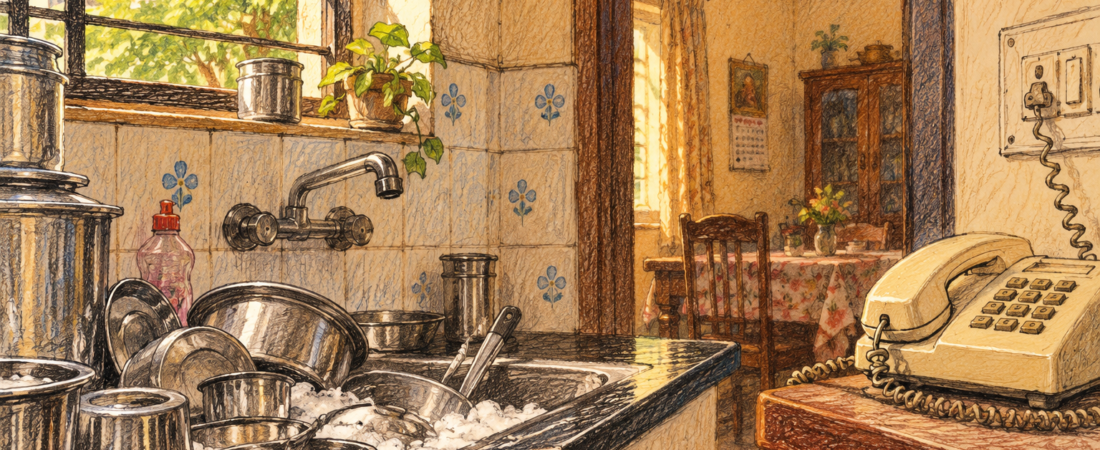
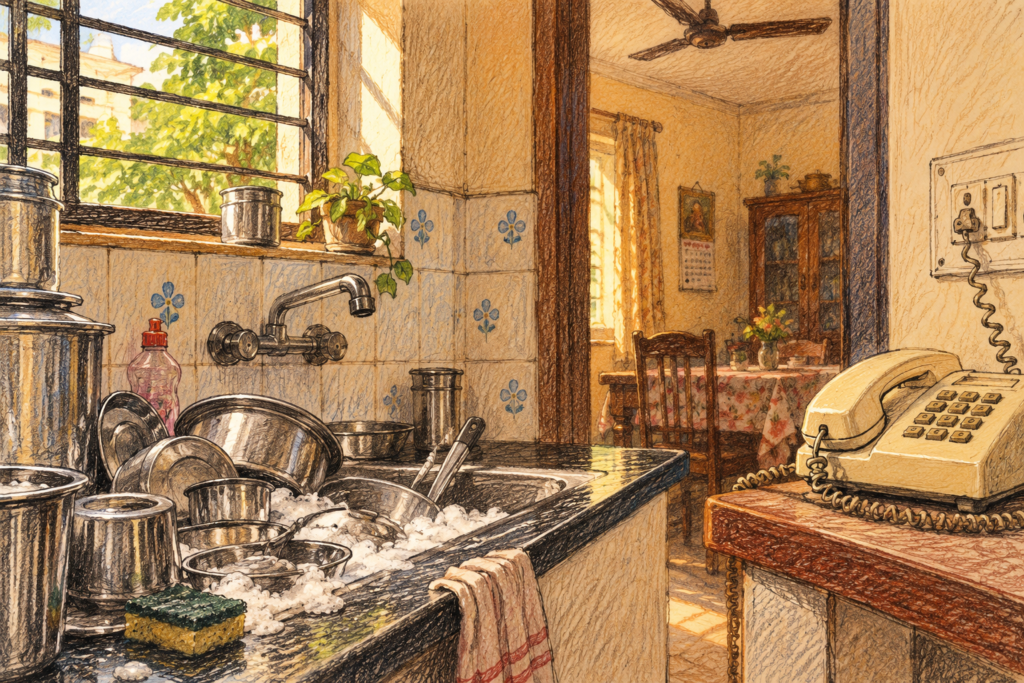
I was standing in the kitchen washing steel utensils because we didn’t have a maid back then. The afternoon felt slow and heavy. The ceiling fan made that familiar ticking sound above me while the sink filled with soap bubbles and wet plates waiting to be rinsed.
Then the landline rang. I dropped the scrubber into the sink and ran to answer it before anyone else could. It was my best friend, Madhu. Her voice was bubbling with excitement.
“Guess what my father got me for my birthday?”
I still remember the pause before she said it.
“A computer.”
A computer?
Today, that probably sounds like someone saying they got a new phone. Back then, at least in my little world, a computer at home was a BIG thing. Computers belonged somewhere else. Offices had computers. Rich people had computers. On television, children with computers always seemed polished, confident and strangely ahead of everyone else.
And now Madhu had one sitting in her house.
Her own computer!
I was excited for her. I wanted to know everything. What did it look like? What games did it have? Could she really switch it on whenever she wanted? What could she actually do with it?
The internet wasn’t even part of my imagination then. Just having a computer felt futuristic enough.
I pictured that big monitor sitting on a desk in her house, its screen glowing while she played Solitaire or clicked around trying to figure out what everything did. Wasn’t it amazing?
But then, somewhere in the middle of all that excitement, I remember having a feeling sweeping through me.
Madhu had asked for a computer for her birthday, and her father had bought her one.
That simple.
Meanwhile, I was growing up learning how to stretch things, save things and adjust. We switched off lights when we left a room. Old containers were washed and reused. Clothes stayed in circulation until they were too worn to wear and eventually became cleaning rags.
None of this had seemed particularly unusual to me before. It was simply how our house worked. But that afternoon, while Madhu was probably sitting in front of her new computer figuring out Solitaire, I was standing barefoot in the kitchen washing utensils.
I don’t think I had ever seriously thought about money before that day. Of course, I knew some families had more than others. Every child knows that at some level. But this was perhaps the first time I could actually feel the difference.
After that phone call, I remember looking around our house a little differently.
The old containers. The things we carefully preserved instead of replacing. The small calculations around what could be bought, what could wait and what we simply managed without. Things I had barely noticed before suddenly seemed to be telling me something.
And along with that awareness came another feeling I hadn’t really known before.
Maybe we were behind in materialistic terms.
It’s strange that this particular memory has stayed with me for so many years. A phone call from an excited friend about her birthday present somehow became one of my earliest memories of understanding money.
Just a phone call from a very excited friend telling me she had got a computer for her birthday. I was excited for her too.
And somehow, after I hung up, I understood my own home a little differently.